Planning an event is exciting.
But the moment you start asking for quotes, comparing vendors, and calculating totals, the excitement can quickly turn into stress.
How much should you actually spend?
Where does most of the budget go?
What are the hidden costs no one talks about?
Whether you are planning a wedding, birthday celebration, corporate gathering, baby shower, or private party, a clear event budget gives you control, clarity, and confidence.
This guide will walk you through everything you need to know about event budgeting, step by step.
Why Event Budgeting Matters More Than You Think
A budget is not just about limiting spending.
It helps you:
- Prioritize what matters most
- Avoid last-minute financial surprises
- Make faster decisions
- Reduce stress during planning
- Stay realistic about expectations
Without a structured budget, small expenses add up quickly. And those small additions are usually what push events over budget.
A well-planned budget keeps your vision aligned with reality.
Step 1: Define Your Total Budget Clearly
Before contacting venues or vendors, decide:
What is the maximum amount you are comfortable spending?
Be honest. This number should feel manageable, not stressful.
If others are contributing financially, confirm those amounts early. Never assume.
Once your total budget is set, avoid adjusting it every time you see something appealing. Your budget should guide decisions, not the other way around.
Step 2: Break Your Budget Into Major Categories
Most events typically divide into these core expense groups:
- Venue rental
- Catering and beverages
- Décor and styling
- Photography and videography
- Entertainment
- Rentals and equipment
- Staffing
- Invitations and stationery
- Miscellaneous and contingency
Seeing everything listed prevents you from forgetting important elements.
Step 3: Understand Fixed vs. Variable Costs
Not all expenses behave the same way.
Fixed Costs
These stay relatively constant regardless of guest count:
- Venue rental fee
- Certain décor elements
- Photography packages
- Entertainment booking fee
Variable Costs
These increase as your guest list grows:
- Catering per person
- Bar service
- Favors
- Printed materials
This distinction is important.
If you need to reduce spending, adjusting your guest count often makes the biggest impact.
Step 4: Allocate Your Budget Strategically
There is no universal formula, but many successful events follow a rough structure:
- 30 to 40 percent: Venue and catering combined
- 10 to 20 percent: Décor and styling
- 10 to 15 percent: Photography and videography
- 10 to 15 percent: Entertainment
- 5 to 10 percent: Rentals and equipment
- 5 to 10 percent: Contingency
These are guidelines, not rules.
If food is your top priority, allocate more there and reduce spending elsewhere.
Your budget should reflect what matters most to you.
Step 5: Always Include a Contingency Fund
Unexpected costs happen.
Extra guests.
Extended hours.
Last-minute rentals.
Additional staffing.
Set aside at least 5 to 10 percent of your total budget as a contingency.
If you do not use it, great. If you need it, you will be glad it is there.
This single step prevents financial panic close to your event date.
Step 6: Look Beyond the Initial Quote
Many people budget based only on headline pricing.
That is risky.
When reviewing quotes, check for:
- Taxes
- Service charges
- Cleaning fees
- Overtime charges
- Equipment rental add-ons
- Delivery and pickup fees
- Corkage or vendor fees
Ask for a full breakdown before committing.
Clarity upfront avoids stress later.
Step 7: Track Everything in One Place
Use a spreadsheet or budgeting tool. Here is a simple template you can use to start with. Feel free to make a copy
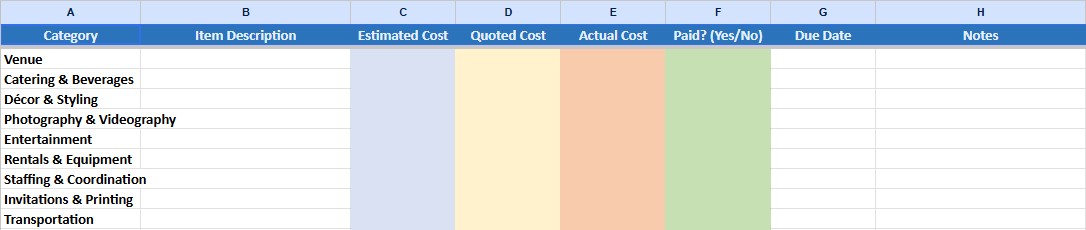
Create columns for:
- Estimated cost
- Quoted cost
- Actual cost
- Payment status
- Due date
Update it regularly.
Waiting until the final weeks to review numbers can lead to overspending without realizing it.
Consistent tracking keeps you in control.
Step 8: Decide Where to Save and Where to Spend
Every event has high-impact areas and flexible areas.
For example:
Guests may not remember the exact centerpieces, but they will remember:
- Food quality
- Comfort
- Atmosphere
- Flow of the event
Instead of cutting randomly, reduce spending in lower-impact categories.
Focus on what enhances the overall guest experience.
Step 9: Consider the Guest Experience
Budget decisions should support comfort.
Ask yourself:
Will guests be comfortable in the space?
Is there enough seating?
Is temperature control adequate?
Is parking convenient?
Is the sound and lighting appropriate?
Sometimes spending slightly more in these areas significantly improves the overall experience.
For small events in Vancouver or Surrey, selecting a thoughtfully designed venue such as Events With Love can help ensure both comfort and flow without requiring excessive additional rentals.
Step 10: Review and Adjust Before Final Payments
Before making final vendor payments:
- Compare actual costs to your original estimates
- Confirm no surprise add-ons remain
- Recalculate your contingency balance
This final review ensures everything aligns with your plan.
Common Event Budgeting Mistakes to Avoid
Underestimating catering costs
Ignoring taxes and service fees
Forgetting décor setup and teardown charges
Not budgeting for overtime
Skipping a contingency fund
Failing to track payments
Making emotional decisions that override financial limits
Avoiding these mistakes alone can save thousands.
How to Keep Your Event Within Budget Without Sacrificing Quality
- Confirm the guest list early
- Choose a venue that includes essentials
- Bundle services when possible
- Limit last-minute upgrades
- Keep your design focused and cohesive rather than elaborate
- Communicate your budget clearly with vendors
Transparency often leads to better recommendations and creative solutions.
Final Thoughts on Event Budgeting
Event budgeting is not about spending less.
It is about spending wisely.
When you clearly define your total budget, allocate it intentionally, plan for surprises, and track every expense, planning becomes calmer and more predictable.
A strong budget allows you to enjoy the process instead of worrying about numbers.
If you are planning in Vancouver or Surrey, choosing a venue like Events With Love that understands both budgeting and guest experience can make the entire process smoother.
And when the day arrives, you can focus on what truly matters:
Celebrating with the people you invited.